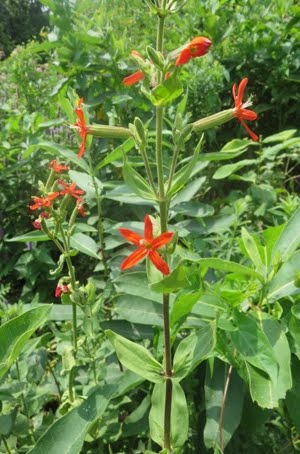
Silene regia

Royal Catchfly
Family: Caryophyllaceae (Carnation Family)
       
·        Hardiness Zones:  5-8
·        Height: 24-36 inches
·        Spread: 12-18 inches
·        Bloom Time: July to August
·        Bloom: small clusters of 5-petaled, scarlet red flowers
·        Light: full sun to part shade
·        Soil: average, well-drained; prefers sandy or gravelly soil
·        Moisture: dry to medium; drought tolerant
·        Use: part shade areas of wildflower gardens, native plant gardens, woodland gardens or cottage gardens; attracts hummingbirds
·        Care: low maintenance; may need to stake taller plants
·        Concerns: no serious insect or disease problems
·        Native to: central and southern United States
·        Notes: clump-forming perennial;  sticky calyx can trap or "catch" small insects
·        Supplier: Agrecol Native Nursery
·        Teaching Garden Location & Code: Pollinator Garden C070, Rain Garden J023

       Content produced through:

       Questions?  

        Find us on Facebook

Liatris pycnostachya

Prairie Blazing Star
Family: Asteraceae (Aster Family)
       
·        Hardiness Zones:  3-9
·        Height: 2-5 feet
·        Spread: 1-2 feet
·        Bloom Time: July to August
·        Bloom: spike of tightly bunched lavender flowers
·        Light: full sun; too little sun can cause twisted growth
·        Soil: average, well-drained; tolerant of poor soils
·        Moisture: dry to medium
·        Use: perennial borders, cutting gardens, prairie gardens or naturalized areas; attracts butterflies, bees, hummingbirds and moths
·        Care: low maintenance
·        Concerns: no serious insect or disease problems
·        Native to: central and southeastern United States
·        Notes: Leaves are very narrow, crowded on the stem and become progressively smaller as they ascend the stem
·        Supplier: Prairie Nursery
·        Teaching Garden Location & Code: Demonstration Prairie I013; Pollinator Garden C085, Rain Garden J017

       Content produced through:

       Questions?  

        Find us on Facebook

Deschampsia cespitosa

Tufted hair grass
Family: Poaceae (Grass Family)
       

·        Hardiness Zones:  4-9
·        Height: 2-3 feet
·        Spread: 1-2 feet
·        Bloom Time: June to July
·        Bloom: tones of gold, silver, purple and green
·        Light: part shade
·        Soil: average, well-drained
·        Moisture: medium
·        Use: ground cover; ornamental grass; attracts birds
·        Care: low maintenance; cut back foliage in late winter or early spring before new shoots appear
·        Concerns: no serious insect or disease problems
·        Native to: transcontinental
·        Notes: clump-forming, cool season grass; forms a low, dense tussock of very thin, arching, flat to inrolled, dark green grass blades; tolerates black walnut
·        Supplier: Agrecol Native Nursery
·        Teaching Garden Location & Code: Pollinator Garden C067

       Content produced through:

       Questions?  

       Find us on Facebook

Carex sprengelii

Long-beaked sedge
Family: Cyperaceae (Sedge Family)
       
·        Hardiness Zones:  3-5
·        Height: 1-3 feet
·        Spread: 2 feet
·        Bloom Time: May to June
·        Bloom: greenish-white or pale yellow spikelets are held above the leaves; pendulous green to brown seedheads follow
·        Light: full sun to part shade
·        Soil: average, well-drained
·        Moisture: prefers moist or wet soil
·        Use: ground cover or accent; rain garden; attracts songbirds
·        Care: low maintenance
·        Concerns: no serious insect or disease problems
·        Native to: native in Alaska and the southern Canadian provinces south to Delaware and west to Montana, Wyoming, Colorado and New Mexico.
·        Notes: numerous pendulant seedheads rise on long stems from the greenish-yellow clumps of narrow, glossy blades; deer resistant
·        Supplier: Agrecol Native Nursery
·        Teaching Garden Location & Code: Naturalistic Garden H124, Pollinator Garden C066, Rain Garden J004

       Content produced through:

       Questions?  

        Find us on Facebook