Hemerocallis minor 'Miller'

Dwarf Daylily; Grassleaf Daylily 'Miller'

Family: Asphodelaceae (Asphodel Family)


·        Hardiness Zones:  3-9

·        Height: 12-24 inches

·        Spread: 9-12 inches

·        Bloom Time: May to June

·        Bloom: 3 to 4.5 inch single lemon-yellow tubular bloom with chartreuse throat

·        Light: full sun to part shade; prefers sunny locations

·        Soil: average; prefers sandy loam

·        Moisture: average; prefers damp locations

·        Use: naturalizing, woodland borders, ground cover, pollinator gardens

·        Care: easy; can be divided in spring or fall when clumps become over-crowded; deadhead plants for cosmetic purposes

·        Concerns: no serious insect or disease problems

·        Native to: species native to northeast Asia, northern China, and Korea

·        Notes: clump forming; 2 -3 blooms per branched scape; blooms open in evening and last two days; dark green grasslike leaves remain attractive all season; rabbit resistant; tolerates Black Walnut; salt tolerant

·        Supplier: Donated by West Madison Agricultural Research Station

·        Teaching Garden Location & Code: Pollinator Garden C175


       Content produced through:

       Dane County UWEX Master Gardener Volunteer Program 


       Questions?  

       Dane County UWEX Horticulture Program


Find us on Facebook 

Geranium maculatum 'Espresso'

Spotted Cranesbill; Spotted Geranium 'Espresso'

Family: Geraniaceae (Geranium Family)


·        Hardiness Zones:  5-8

·        Height: 18-24 inches

·        Spread: 12-18 inches

·        Bloom Time: May to June

·        Bloom: pale lavender-pink flowers with creamy-white center; 5-petaled, saucer-shaped, upward-facing; held well above foliage mound; mature to beaked seed capsules

·        Light: full sun to part shade

·        Soil: average, well-drained

·        Moisture: low to average water needs; drought tolerant once established

·        Use: beds; borders; rock, woodland, and cottage gardens; prairies and meadows; ground cover

·        Care: easy; remove flowered stems and old leaves to encourage production of fresh foliage and flowers; may be lightly sheared to revitalize after hot dry spells

·        Concerns: no serious insect or disease problems; rust, leaf spot, and mildew may occur; watch for slugs and snails

·        Native to: species native to eastern  North America

·        Notes: noted for its chocolate leaves (to 6 inches), deeply-cut and five-lobed; foliage forms a loose mound and remains attractive all growing season if soil is kept moist; naturalizes in optimum conditions; flowers attract butterflies; deer and rabbit resistant

·        Supplier: Landscape Designs, Inc.

·        Teaching Garden Location & Code: Naturalistic Garden H177


       Content produced through:

       Dane County UWEX Master Gardener Volunteer Program 


       Questions?  

       Dane County UWEX Horticulture Program

Find us on Facebook

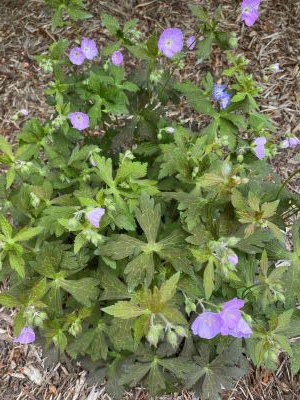
Geranium maculatum 'Crane Dance'

Cranesbill Geranium 'Crane Dance'

Family: Geraniaceae (Geranium Family)


·        Hardiness Zones:  4-8

·        Height: 24-28 inches

·        Spread: 28-32 inches

·        Bloom Time: late spring to midsummer

·        Bloom: vibrant blue-lavender, 5-petaled, saucer-shaped, upward-facing, held well above foliage mound; mature to beaked seed capsules

·        Light: full sun to part shade

·        Soil: average, well-drained; tolerant of poor soils

·        Moisture: average; tolerates some drought once established

·        Use: beds; borders; rock, woodland, and cottage gardens; containers; mass planting

·        Care: easy; remove flowered stems and old leaves to encourage production of fresh foliage and flowers; may be lightly sheared to revitalize after hot dry spells

·        Concerns: no serious insect or disease problems; rust, leaf spot, and mildew may occur; watch for slugs and snails

·        Native to: species native to eastern  North America

·        Notes: noted for its foliage interest; deeply-cut and five-lobed leaves emerge chocolate-brown in spring, turn bronze-green in summer and become bright red in autumn; foliage forms an upright clump  and remains attractive all growing season if soil is kept moist; in too much shade, its habit will be less compact and flowers fewer; naturalizes in optimum conditions; flowers attract butterflies and bees; deer and rabbit resistant

·        Supplier: Landscape Designs, Inc.

·        Teaching Garden Location & Code: Naturalistic Garden H178


       Content produced through:

       Dane County UWEX Master Gardener Volunteer Program 


       Questions?  

       Dane County UWEX Horticulture Program
 

Find us on Facebook

Lobelia cardinalis 'Golden Torch'

Cardinal Flower 'Golden Torch'

Family: Campanulaceae (Bellflower Family)


·        Hardiness Zones:  4-9

·        Height: 24-36 inches

·        Spread: 15-18 inches

·        Bloom Time: July to September

·        Bloom: ruby-red red spikes

·        Light: full sun to bright shade

·        Soil: prefers rich, moist, humusy, well-drained soil

·        Moisture: medium to wet; needs constant moisture

·        Use: accent or mass; will naturalize; attracts hummingbirds and butterflies; effective near ponds, streams; provides late summer bloom to the perennial border, wild garden, rain garden, native plant garden or woodland garden

·        Care: low maintenance; divide clumps in spring to early summer

·        Concerns: no serious disease or insect problems

·        Native to: North America

·        Notes: bright gold foliage in early summer

·        Supplier: Landscape Designs, Inc.

·        Teaching Garden Location & Code: Naturalistic Garden H162


       Content produced through:

       Dane County UWEX Master Gardener Volunteer Program 


       Questions?  

       Dane County UWEX Horticulture Program

Find us on Facebook